Digital Spaces and Places, A Spectrum of Online Ministry Engagement
A Summary Paper Presented to the Digital Mission Consortia by Todd Korpi, DMiss
The purpose of this paper is therefore to further elucidate the nuanced
differences between digital spaces and digital places and to provide practical
examples for how church and parachurch leaders might recalibrate their
online ministry efforts by learning to exegete their digital context
at this most basic level.
This report is designed to provide preliminary findings, both from existing literature and initial field research, to understand the landscape of the church’s participation in the mission of God (missio Dei) in digital places and spaces. This report’s preliminary findings, recommendations, and conclusions are just that––preliminary. They are put forward in an attempt to initiate a broader conversation around the digital mission that considers the perspectives and practices of many rather than providing exhaustive and universally applicable conclusions set in stone. The belief that underlies this research endeavor is that ongoing collaboration, as guided by the leading of the Holy Spirit, is essential to understand how to minister to people in digital spaces.
In this presentation, Dr. Ed Stetzer outlines four new strategies for Christians seeking to reach our world with the gospel.
Dr. Stetzer builds on the Digital Consortium’s research on digital mission in exploring our new digital frontier as one of these strategies, helping pastors and church leaders to think critically about how best to engage. This presentation will be useful for leaders searching for practical tools, innovations, and insights on digital mission.
As a preacher, are you just transferring information, or are you speaking from a transformed place?
No one can preach God’s Word well without first being personally transformed by it. The Craft & Character Podcast exists to help preachers grow in both sermon craft and soul formation, so their preaching flows from integrity, depth, and lived faith.
With 100+ episodes, Steven Carter hosts conversations on preaching, spiritual disciplines, creativity, leadership, and the inner life required for long-term faithfulness in ministry.
Ed Stetzer talks with 10 of todays most gifted teachers, preachers, and communicators as they discuss preaching, sermon preparation, the necessity of having a multitude of counselors, and raising up the next generation of young leaders. Asking the big questions of what makes compelling preaching that changes lives for Christ.
The-Church-and-the-Drug-Crisis-in-Rural-Communities-Pt-1-the-rise-of-opioids
The-Drug-Crisis-in-Rural-Communities-pt-2 (1)
Renewed Interest: A Fresh Look at the Rural Church
Rural Ministry Assessment_Part 1_People and Place
Rural Ministry Assessment_Part 2_Groundtruthing_Greene
Rural Ministry Assessment_Part 3_What Hat_Centrality and Saliency_Greene
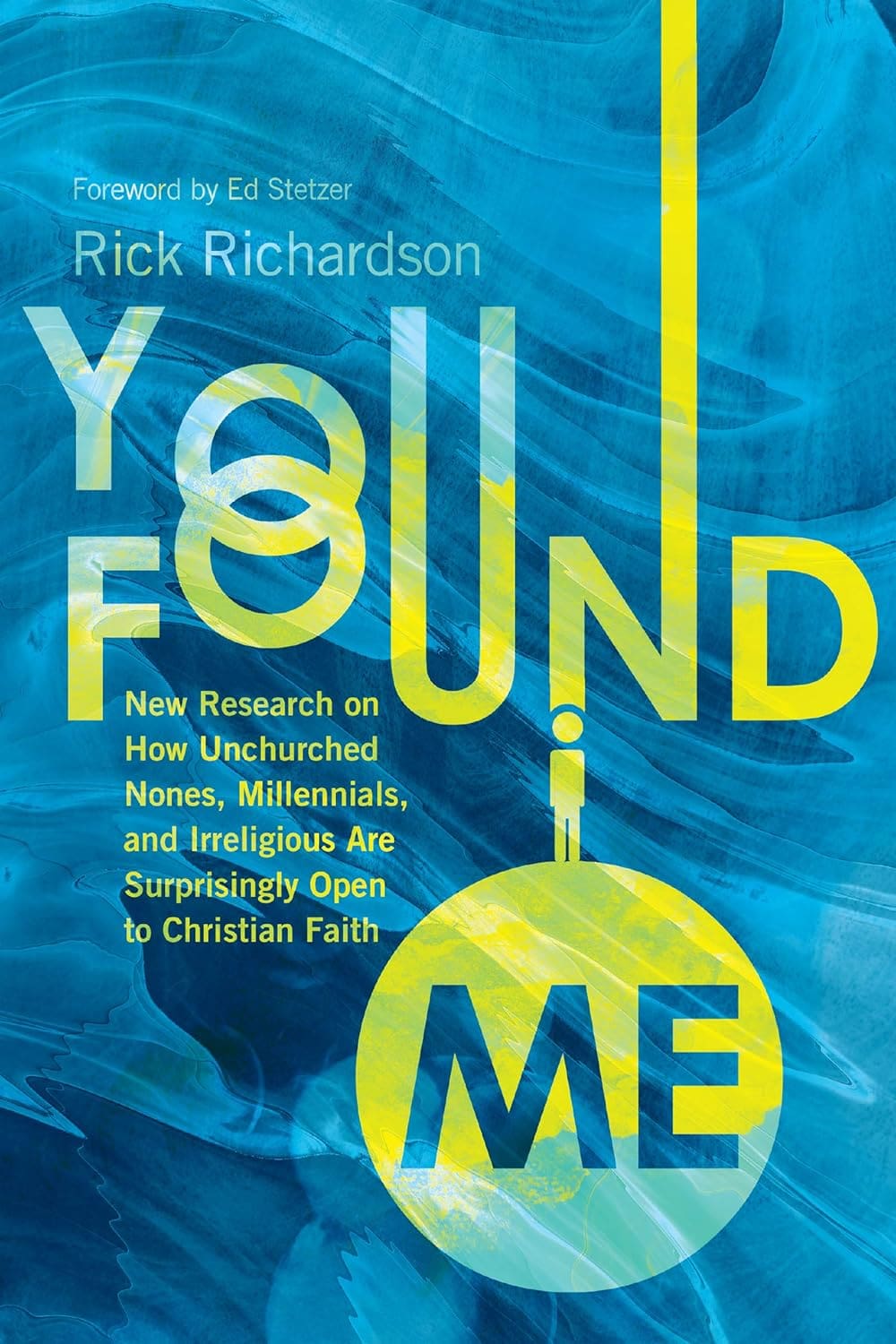
In his book, You Found Me researcher, practitioner, and Exec. Director, Dr. Rick Richardson brings groundbreaking new research to bear on the popular narrative that the younger generation is hostile to evangelism, the idea of faith, and that they are abandoning Christianity. Richardson’s research lays out the case that Christians should be optimistic about evangelism and outreach.
The Church Evangelism Institute and African American Church Evangelism Institute primarily draws from the research in You Found Me.
At the Church Evangelism Institute, we encourage congregations to incorporate what is known as the B.L.E.S.S. approach. However, some churches are finding two aspects of the approach harder to implement than others – the first and last letter of the acronym. For that reason, here are some resources that focus on those two areas.
Correctional Ministries Institute Resources
Welcome to CMI’s Resource Center. Our goal is to share and show the Love of Christ through correctional ministry.
Correctional chaplains have an opportunity to minister with corrections staff, a unique and often-overlooked population of men and women serving in our youth detention centers, jails, and prisons. This book offers insights that broaden your understanding of corrections staff and their culture. Strategies, practices, and resources are identified to increase the effectiveness of your outreach to corrections staff along with tools to break down barriers and specific ways to build bridges as you show and share the love of Christ.
Caterina Spinaris, Ph.D., LPC, is the Desert Waters Correctional Outreach Founding Director and a Licensed Professional Counselor in the State of Colorado. Caterina conducts research on correctional employee wellness and the health of correctional organizations, and develops educational materials on correctional staff wellness, based on research findings and her clinical experience treating correctional staff and families.
Daria Mayotte, M.A., is Deputy Director, Master Instructor for Desert Waters Correctional Outreach. She brings with her a rarely-found wealth of multi-cultural corrections experience, combined with her teaching experience and clinical training. With a background and love for teaching, Daria Mayotte first developed a passion for those working in prison while teaching literacy to juvenile offenders at Pollsmoor Prison in Cape Town, South Africa, in 2001-2002.
As a ministry leader or chaplain, you know first-hand the pain points associated with leading a correctional ministry. It’s often the tyranny of the urgent pulling your energy towards the immediate rather than solving the big picture, significant problems, and making a long-term impact. Does your organization lack a strategic plan or a clear sense of direction? Has recent leadership or policy change affected your programs? How can you make an impact in light of these pressures? One strategic decision at a time. This book will help with ideas around strategic planning, change and conflict management, goal setting, managing success, and more.
Ed Stetzer, Ph.D., Executive Director of the Wheaton College Billy Graham Center and professor and dean of the Litfin School of Mission, Ministry, and Leadership at Wheaton College. He has trained pastors and church planters on six continents, has earned two doctorates, and has written hundreds of articles and a dozen books. As editor-in-chief of Outreach magazine and host of The Stetzer Church Leaders Podcast, Ed helps Christian leaders navigate and lead through the cultural issues of our day.
Karen Swanson, Ed.D., Director of the Correctional Ministries Institute of the Wheaton College Billy Graham Center. She develops and teaches courses in the Correctional Ministries Certificate program, is co-founder of the Correctional Ministries and Chaplains Association, a workshop presenter, and author, and serves on the ministry board of directors.
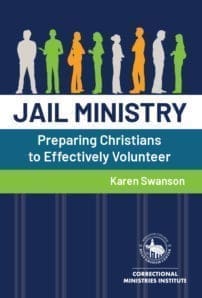
Volunteering in jail is a cross-cultural ministry requiring specialized training. Most jails do not offer volunteer training, or the training focuses only on security and safety issues. This handbook strives to inform and prepare Christians to effectively volunteer in a jail environment making the most of this ministry opportunity.
Understanding the unique characteristics, roles, and responsibilities provide insight into those who live and work there. Recognizing and developing the skills needed to be a quality jail volunteer will help avoid pitfalls that damage ministry opportunities while living out a Biblical foundation for ministry.
“For the jail and jail ministry to fulfill its role, volunteers are needed. Volunteers are wanted. Volunteers are essential. But not everyone can be, will be, or wants to be a high-quality jail volunteer. It is to this select group of high-quality individuals that Dr. Swanson is writing. So that they may be thoroughly equipped to graciously, wisely, and lovingly touch the lives and hearts of those who are entering and exiting through the revolving doors of the local jail. I trust this book will be an encouragement to you as you serve this forgotten people group.”
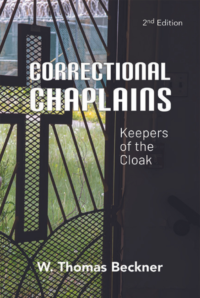
The Faith factor has been identified as both a significant variable in positive inmate adjustment and a potential remedy for recidivism. At the same time, very little has been written about the primary facilitator of religious services inside our nation’s jails and prisons – the Chaplain. In this book, Dr. Thomas Beckner has provided a comprehensive perspective of this vital profession.
This book will familiarize the reader with the work of chaplaincy in contemporary correctional settings and offer a functional model that incorporates a wide range of job roles within an enduring paradigm and suggest a template for ministry within any correctional setting.
Dr. W. Thomas Beckner is a recognized authority on correctional chaplaincy, having served in a variety of roles in the criminal justice arena over the past 35 years. He has served in jail and prison chaplaincy, non-profit prison ministry, chaplaincy placement & supervision, and as a consultant to several state and county agencies. Dr. Beckner has pioneered educational programming for correctional ministries – for community-based, non-profit organizations as well as college certificate programs – and has both a department head and graduate coordinator for criminal justice degree programs at two universities.
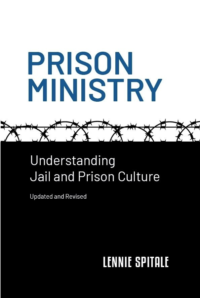
For most Christians, prison culture is like visiting a foreign land, and the thought of ministering behind bars with the incarcerated is an intimidating prospect. The updated edition of Prison Ministry will off you the empowerment you need as a volunteer, chaplain, pastor, or lay leader in doing effective prison ministry. You will learn about the emotional challenges of the incarcerated, the environment of fear, the culture of deprivation, friendships, guidelines, dos and don’ts, and more.
Lennie Spitale has served for over 40 years in all levels of correctional facilities, as Director of Prison Ministries for Vision New England, Instructor for Prison Fellowship, and a trainer of chaplains for Good News Jail & Prison Ministry.
Of the former edition, the late Charles Colson, founder of Prison Fellowship Ministries, wrote: “This may well be the definitive book on prison ministry. Fascinating insights about the prison culture and how to reach it. Mandatory reading for everyone in corrections and for Christians who care about the command to visit a prison.”
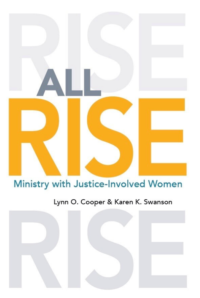
The mass incarceration of women is a disturbing trend in American society. A 2018 report estimates 99,000 women are living in state prisons, with another 89,000 women in local jails. More than one million women are on probation or parole. A history of abuse and trauma, health problems, parenthood, and poverty add to the “collateral consequences” of incarceration when these women look for work, housing, and financial support after release.
Despite an ongoing body of scholarship examining male offenders, less is known about females under correctional control. In the past, social scientists, practitioners, and theologians were largely inattentive to women’s experiences, but there is progress in terms of understanding women’s pathways out of crime and gender differences that lead to recidivism. However, there are few recent and relevant books for Christians working in faith-based programs with women who are under the control of the criminal justice system (“justice-involved women”). The purpose of this text is to give voice to the experiences of these women and improve important ministry outcomes for those faithfully working on their behalf. It is also a call to action for God’s people to demonstrate mercy and justice for justice-involved women. As individuals, churches, and communities become informed and engage in this important social issue, Kingdom work is elevated. Under the auspices of the Institute for Prison Ministries, the authors merged interviews, surveys, and site visits with over 550 individuals to gain this perspective.
Those who serve these women, as well as those who are interested in getting started in female justice initiatives, will learn the:
-personal and economic impact of female incarceration
-process of incarceration from arrest to release
-profile of justice-involved women
-patterns of socialization in correctional facilities
-problems of reentry and recidivism
-psychological and spiritual healing that leads to change
-practices of effective ministry programs
By John Kinsley and Scott Larson